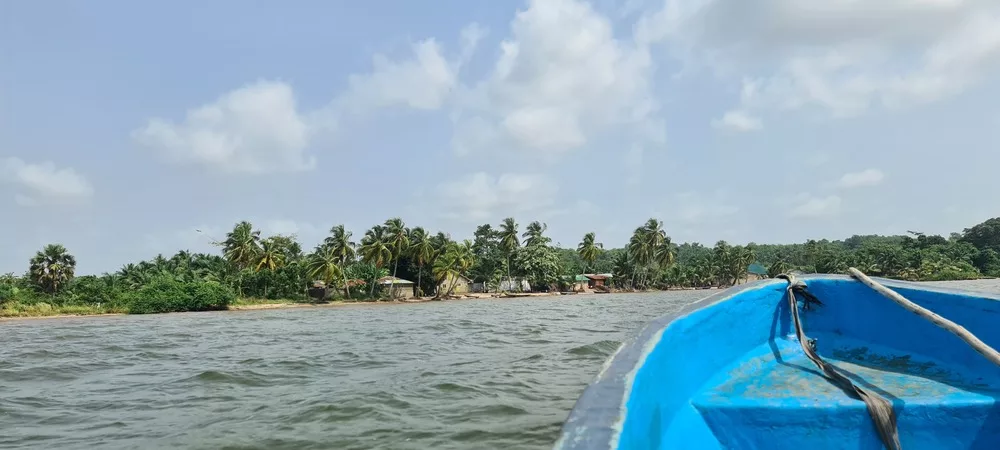
Share your travels responsibly
Today, we no longer travel with just a backpack, we also travel with an audience. So we might as well share these experiences responsibly.
The more I scroll, the more I see influencers acting like they own the places they visit, showing little to no respect for local communities or the places themselves.
Photos of children shared without consent, sensationalist Reels that reinforce the same stereotypes, moral lessons directed at local communities about how to cook, how to clean their streets…
The list goes on.
If we aspire to a more just, more equal, and less colonial world, it’s essential to rethink how we tell our travel stories and adopt a more respectful approach to storytelling.
At the end of the day, we are only guests. And respect should never be optional.
In this article, I’m sharing a few ways to help you tell your future travels more responsibly.
This article contains affiliate links 🙂 They earn me a small commission on bookings, but no worries—there’s no extra cost to you. Thanks for supporting my blog!
STORYTELLING IS THE ART OF TELLING A STORY TO CONVEY A MESSAGE, AN EMOTION, OR A PERSPECTIVE.
When it comes to travel, it’s not just about sharing beautiful images—it’s about giving meaning to what you share: providing context, telling a story of a human connection, and highlighting a reality.
Every piece of content you publish is an interpretation of reality. And that interpretation shapes how others perceive a destination, its people, and its culture.
In other words, telling a travel story is never neutral. It’s already taking a stance.
1. Avoid the savior complex
Colonialism has left behind many legacies, including the well-known white savior syndrome.
At the time, colonizers saw it as their mission to bring education, religion, and culture—as if local communities and their ways of life had less value. They needed to be “saved.”
This is, of course, a simplification, but you get the idea. Today, that same sense of superiority shows up in tourism through the savior complex, expressed in narratives where the traveler “helps,” “supports,” or “brings value” to destinations portrayed as dependent.
This kind of storytelling reinforces power imbalances, places the traveler at the center of the story, and erases the realities, skills, and initiatives of local communities.
>>>> When you tell your travel stories, don’t cast yourself as the hero. Show the place in all its complexity, highlight local initiatives, and make space for the people who actually live there.
Want to learn more about conscious and decolonial travel?
Check out my most popular articles:
👉 Responsible travel: the rise of ethical and decolonial journeys
👉 What is slow travel? The benefits of conscious and sustainable tourism
👉 Digital nomads and gentrification: traveling more consciously
2. Amplify local voices
If you truly want to portray a place accurately, you can’t rely solely on your own perspective.
That of a privileged visitor, passing through and only grasping part of the reality.
Even if you spend three months in a destination, your experience is nothing compared to someone who has lived there for 30 years.
That’s why it’s important to let local people speak about their realities, their living conditions, and the challenges they face.
Of course, you don’t have to formally interview them, but you can highlight local initiatives, share community projects, or simply take the time to connect and deepen your understanding of the place.
You can also give them the floor directly through collaborations or recorded conversations, as long as you have their informed consent.
>>>> Don’t just tell a place’s story: make space for the people who live it. Amplify, collaborate, listen—that’s also what responsible travel looks like.

3. Respect local communities
Even if your Twitch livestream involves filming yourself while exploring Mozambique, try to use common sense. Take the time to understand where it’s appropriate to film without disturbing local communities.
Yes, your content might lose some spontaneity—but isn’t respecting others more important?
If someone refuses to be filmed, move on without pushing.
And if they agree, make sure you have truly informed consent. It’s not just about asking if they’re okay being on camera, but also explaining how the footage will be used and how you intend to portray them.
Filming someone with their permission and then publicly criticizing their restaurant or way of life is, for example, deeply disrespectful.
When it comes to children, do not film or photograph them, even with parental consent.
First, because you likely wouldn’t do it in your own country. Why would something unacceptable at home become acceptable elsewhere?
Second, because a significant number of images of children shared online are misused for harmful purposes.
>>>> Filming someone does not give you ownership over their image. Ask, explain, respect—and accept that sometimes, the best thing to do is not capture anything at all.
4. Always provide context
You can’t arrive in a country, take a few photos or videos, and post them with your own interpretation as if they were absolute truths. It’s both reductive and disrespectful.
Anywhere in the world, a moment, a story, or an anecdote is shaped by a range of factors: social, political, cultural, religious, educational. Nothing exists in isolation. Understanding a place means acknowledging that complexity.
Sharing a few seconds of video without context risks distorting reality and reinforcing already deeply rooted stereotypes.
Posting a 30-second video of a trans woman in India asking for money, while complaining about the situation, creates a completely biased portrayal.
Without context, you don’t understand what led her to that situation. And it’s clear that circumstances like these are shaped by broader social and political dynamics.
>>>> Content without context can quickly become misleading. Before you post, take the time to understand, add nuance, and explain what you’re showing.

5. Acknowledge your position
Colonialism has left deep marks, especially in how certain hierarchies between populations have been constructed and perceived.
Even today, these patterns continue to shape the way we see the world.
As travelers, we often assume that our education is better (we’ve seen the world), that we’re open-minded (we meet all kinds of people). But that’s not necessarily true.
We don’t have all the answers, nor the legitimacy or the perspective needed to fully understand the realities of the places we visit. Acknowledging this is already a step back—and a way to learn how to stay in your place.
It’s also important to remember that our ability to travel is shaped by privilege.
White travelers can access many places more easily. Those with Western passports move across borders with fewer barriers. And our euros or dollars often place us in a position of power relative to local communities.
All of this shapes how we experience travel, and therefore how we tell and share those stories. That’s why it’s impossible to ignore when talking about travel storytelling on social media.
>>>> Acknowledging your privileges isn’t about guilt—it’s about context. Tell your stories with an awareness of the position you hold, not as if it didn’t exist.
Want to learn more about conscious and decolonial travel?
Check out my most popular articles:
👉 Responsible travel: the rise of ethical and decolonial journeys
👉 What is slow travel? The benefits of conscious and sustainable tourism
👉 Digital nomads and gentrification: traveling more consciously
I hope this article has given you a few tools to better share your travels—especially if you have a large audience, but not only.
Becoming aware of the habits we’ve inherited from colonialism is essential if we want a more equitable travel industry that respects local communities, wherever they are.