Things to know before a first trip to Benin
Benin was a country I had been dreaming about for quite some time.
I was really eager to discover Africa, that unfamiliar continent which has always seemed to me to hold an immense cultural richness.
On Instagram, there was no shortage of content presenting the country as an “easy” destination to start exploring the continent. Enough to finally convince me.
Spoiler alert: I didn’t find it easy at all…
There was also voodoo. A religion that had always fascinated me, even though I actually knew very little about it.
That curiosity grew even stronger when I started taking an interest in spirituality on a personal level.
Without going into too much detail — because voodoo is also made up of secrets that are discovered on site and not shared just anywhere — I can say one thing: I was not disappointed at all.
However, this trip left me with mixed feelings.
I met incredible people who deeply marked my life, lived scenes worthy of a movie… but I also found this journey particularly difficult at times, especially as a woman traveling alone, European and brown.
So I’d rather warn you from the start: this article will sometimes be very subjective.
Every travel experience is unique, and what I share here is by no means an absolute truth.
It is simply my personal experience, shared in the hope that it may help you — especially if you resemble the kind of traveler I am, but not only.
Here are 12 things to know before a first trip to Benin.
This article contains affiliate links 🙂 They earn me a small commission on bookings, but no worries—there’s no extra cost to you. Thanks for supporting my blog!
12 Things to Know Before a First TRIp to Benin
Information you should know, based on my own experience (which, of course, is not universal), to enjoy an incredible trip in Benin — a country I’m sure will fascinate you.
TABLE OF CONTENTS
- It’s a country I don’t recommend visiting alone
- Malaria is very present
- Payments are made almost exclusively in cash
- Traffic is intense and Google Maps isn’t always reliable
- Being a POC can be difficul
- Power cuts are frequent
- An e-visa is required to enter the country
- French is the official language
- You won’t be welcome at all vodun events
- Hotels are cheaper and the offer is greater on site than online
- Don’t take photos without permission
- Avoid the north of the country
- 12 reasons to visit Benin

Benin in a nutshell
Located in West Africa, Benin is a country bordered by the Atlantic Ocean to the south, Togo to the west, Nigeria to the east, and Burkina Faso and Niger to the north.
Formerly known as Dahomey, it has a history marked by precolonial kingdoms, the slave trade, and French colonization.
The country has around 13 million inhabitants, and its official capital is Porto-Novo, although Cotonou serves as the economic hub and the country’s most dynamic city.
Benin’s economy is mainly based on agriculture, commerce, and the port sector, with the Port of Cotonou playing a key role in regional trade.
Cotton is one of the main export products, alongside cashews, corn, and palm oil.
Culturally, Benin is often considered the birthplace of Vodun (Voodoo), a religion officially recognized and deeply rooted in everyday life.
The country is also notable for its great ethnic and linguistic diversity.
12 things to know before a first trip to Benin
DISCLAIMER: Before we begin, an important clarification: some of the points discussed below reflect a very personal perspective.
This is my experience, lived at a specific moment, as a solo traveler, brown-skinned and European. Benin, of course, cannot be summarized in these lines. It is a diverse, complex country, and each person will experience it differently.
My sole aim is to shed some light for those preparing their trip.
1. It's a country I don't recommend visiting alone
I know, that’s a strong start—especially since I’ve been a dedicated solo traveler for years—but unfortunately, this is my experience.
If, like me, you come from a Western country, no matter your skin color (I met a Black friend who went through the exact same thing), several “assumptions” will be projected onto you: that you have money, that perhaps you’re here to have sexual encounters with locals, or that a relationship with you could secure a residence permit in Europe…
I’m not saying that 100% of Beninese people think this way. Of course, that’s not the case.
These assumptions stem from a colonial legacy that is still very present, just as we sometimes continue to project clichés of poverty, danger, or lack of civilization onto the Global South.
These projections exist on both sides and remain deeply harmful. You can’t essentialize places or people based solely on geography.
Concretely, as a woman traveling alone, this translates into constant stares (which is understandable—you immediately stand out as an outsider), frequent requests for money, and flirtations motivated by the wrong reasons.
Believe me, I understand all these mechanisms. As a decolonial traveler, I reflect a lot on these issues.
But living them day after day, alone, can become very heavy. This diffuse form of violence personally affected me a lot during my stay.
So my advice is: travel with someone. Being two or more people always makes it easier to handle these kinds of situations.


Traveling alone also has an impact on the budget.
Traveling alone in Benin also has a financial impact.
It is entirely possible to find affordable accommodations, especially if you book once you arrive, and museum entrances remain reasonably priced.
However, when it comes to excursions or visits outside the cities, prices rise quickly.
Some visits are difficult, or even impossible, to do alone—either because of transportation or simply because you risk getting lost.
I had to give up on several visits due to the costs. If I had been accompanied, especially in a group, I could have done many more things while significantly reducing expenses.
If, like me, you have no travel companions, make sure you have a realistic budget for excursions. As a reference, prices could range from €50 to €200 for just a few hours of activities.
These rates are actually fair considering what they include, but over the course of a trip, the total adds up quickly.
So the issue isn’t the price itself—it’s traveling alone.
This is precisely why I’m currently planning a group trip to Benin.
👉 If this type of trip interests you, you can sign up for the waiting list to be notified when it launches.
Join the interest list for the Benin trip in winter 2026–2027!
Thank you for your interest!
This travel project is still in the planning stage. The idea is to build a meaningful experience, in a small group, for the winter of 2026–2027.
2. Malaria is very present
Benin is located in a tropical zone, so malaria is a reality—especially in certain regions and during the rainy season.
There’s no need to panic, but it’s important not to take the issue lightly.
Before traveling, I recommend consulting a healthcare professional who can advise you on an appropriate preventive treatment.
Once at your destination, there are a few simple precautions worth adopting: sleep under a mosquito net, use an effective repellent, wear clothing that covers your arms and legs in the late afternoon and evening, and avoid humid areas after nightfall.
As for repellent, I strongly suggest buying it before leaving your home country.
I personally thought I would easily find some in my neighborhood in Cotonou, but after visiting numerous pharmacies, I couldn’t find any. So it’s best to be prepared and plan ahead.
Are you planning your trip to Benin?
Check out my most popular articles:
👉 What to Do in Cotonou?
👉 SIM Card or eSIM in Bénin?
👉 My Favorite Hotels in Benin?
👉 What to Do in Ouidah?
3. Payments are made almost exclusively in cash
In Benin, cash is king. Outside of large hotels and high-end restaurants, card payments are uncommon—if not completely nonexistent.
It’s therefore essential to plan regular cash withdrawals and always carry enough cash for everyday expenses: transport, meals, accommodation, visits, or excursions.
Personally, I have four international cards, yet some ATMs didn’t accept any of them. The screen would simply go black or display an error message.
For reference, I had no issues withdrawing money at Société Générale.
ATMs are available in major cities, but they can be out of service or run out of cash.
In smaller towns, they’re less common, and if your card doesn’t work at the only available ATM, things can quickly become complicated.
Another important point: lack of change. It’s quite common for shopkeepers not to be able to give you the correct change.
So try to carry small bills and coins whenever possible.

4. Traffic is intense and Google Maps isn't always reliable
Traffic in Benin can be intense, chaotic, and disorienting, especially in large cities like Cotonou.
Traffic jams are frequent, traffic rules are sometimes very flexible, and motorbikes are everywhere.
If, like me, you get around on foot, crossing the street—especially if you’re not used to this type of destination—can be a real challenge.
Another point to keep in mind: Google Maps is not always reliable.
Some roads don’t appear, others are poorly marked, and travel times can be largely underestimated.
At night, streets are often poorly lit. There are potholes in the road, and sidewalks are sometimes badly defined.
You eventually get used to it, but it can be quite unsettling at first.
Probably for all these reasons, locals rely heavily on moto-taxis to get around.
You can flag them down in the street, but as a tourist, you’ll likely be charged more than the real price.
That’s why I recommend the Gozem app—the local equivalent of Uber—which allows you to get around more calmly and pay a fair price.
Also, keep in mind that few drivers carry change, so it’s best to avoid large bills.
5. Being a POC can be difficult
Although I spoke with an Afro-descendant friend who went through the same experience, I believe it is essential to talk here about my own experience.
I was born in Sri Lanka. I consider myself a racialized, brown, and decolonial person.
In Benin, however, I was perceived as white. Many people thought I was Brazilian or Haitian—therefore Afro-descendant—but despite that, I was constantly called “the white woman.”
When people called me yovo (which literally means “white” in the local language), it didn’t particularly bother me.
I understand that the majority of tourists are white and that there is no specific category for a profile like mine.
However, being constantly labeled as a white person in French, or as a “tanned white woman,” was much more painful.
Not because the word itself is an insult, nor because I have anything against white people as individuals.
But because that label erased an essential part of my identity.
As a racialized person, I grew up—and continue to live—with the consequences of structures and privileges to which I have never had access.
Being pushed back into the white social group meant seeing my experiences, my struggles, and the discrimination I have faced disappear, as if my story could be simplified or even denied.
This became even more pronounced when I explained that I was born in Sri Lanka, in Asia, and was asked whether that country really existed, or when it was denied that this part of the world had also been colonized.
Of course, I did not expect people in Benin to know the history of Sri Lanka. That is not the issue.
What was difficult, however, was seeing my identity questioned—or even denied—on a daily basis.
At the same time, I am glad to have been able to talk about my identity with several people and to exchange about a reality they were not familiar with.
6. Power cuts are frequent
In Benin, power outages are common, even in major cities.
In fact, I spent a day and a half without electricity at my hotel, as entire neighborhoods often lose power.
This can also happen in your accommodation or at a local host’s place when the breakers trip, which happens quite easily.
And when there’s a power cut, there’s no Wi-Fi—something that can seriously complicate the organization of your trip, especially if you need to contact a guide, make a reservation, or simply order a moto-taxi.
To avoid any issues, I strongly recommend getting an eSIM before you leave. It will allow you to have internet access as soon as you land.
👉 Discover Holafly’s eSIM and enjoy a 5% discount with my code BONSVOYAGESETC.
7. An e-visa is required to enter the country
To visit Benin, an electronic visa (e-visa) is required for most nationalities, including European ones.
But don’t worry: the process is very straightforward. You simply need to go to the official website set up for this purpose and fill in the required information.
You will also need to make a payment, which depends on the length of your stay and whether you apply for a single-entry or multiple-entry visa.
The response can take a few days, although in my case it literally took just five minutes.
It is recommended to apply 5 to 7 days before departure, and I advise you to print your e-visa and keep a digital copy on your phone as well. This makes arrival much easier.
Don’t throw away the printed version! It may come in handy later, especially if you cross the border into Togo.

8. French is the official language
French is the official language of Benin, although local people speak other languages depending on the region (Fon, Yoruba, etc.).
The vast majority of people speak French, especially in the tourism sector.
So you won’t have any trouble making yourself understood, even if some words are sometimes used differently, which can lead to quite amusing situations.
Of course, I recommend learning a few words in the local language to make interactions easier.
9. You won't be welcome at all vodun events
Vodun is the religion of Benin, and it fascinates me deeply.
Thanks to Beninese friends, I was lucky enough to learn a great deal about its organization, its practices, and its importance in everyday life. I was even able to attend ceremonies and rituals.
But it’s essential to understand one thing: not everything is accessible to visitors.
Some ceremonies are strictly reserved for initiates or members of the community.
I have a friend who was very enthusiastic about introducing me to Vodun.
He regularly invited me to rituals or events organized by his family or his marabout, and one day he invited me to a slightly larger event, supposedly open to everyone.
Trusting him completely, as I always did, I followed him without really knowing where I was going. When we arrived, I quickly felt that I didn’t belong there.
The place was crowded, all eyes turned toward me, and I was asked for money several times.
As I wasn’t prepared, I only had small notes. The situation escalated, and I was threatened several times, until my friend finally took me out of the place.
Above all, this experience taught me one thing: the problem wasn’t Vodun, but my lack of understanding of the context.
That’s why my advice is to attend only small family events, or to go with a local guide who knows exactly where to take you.
If you want to take part in larger events, it’s best to travel during the Vodun Days in January, in a more accessible and well-organized setting.
In any case, always remain discreet and respectful, as these moments are sacred for the local population.
And I can assure you that you will live absolutely incredible experiences.

10. Hotels are cheaper and the offer is greater on site than online
As I had never traveled to this part of the world before, I preferred to book all my accommodations online, but the options are quite limited and the prices are fairly high for a solo traveler.
My recommendation is to book just one night and, once there, walk around and ask about availability.
In fact, on the ground you’ll find a much wider range of accommodations at more affordable prices.

11. Don’t take photos without permission
In Benin, photography is a sensitive issue, especially in markets, but in reality this is true almost everywhere.
Taking photos without asking for permission can be perceived as disrespectful and may even lead to conflicts—I witnessed this myself.
My advice: always ask for permission. Locals will appreciate this gesture, and it will allow for much more genuine interactions.
As for Vodun ceremonies or visits to sacred places, photography is strictly forbidden for visitors. Make sure to respect this rule at all times!
12. Avoid the north of the country
It is mainly the south of the country that receives the most tourists, although the north also has great treasures to discover, such as Pendjari National Park or the Tata Sombas.
The problem is that this area is particularly sensitive to the terrorist threat, especially in regions close to the borders.
Security instability is real and, unfortunately, some kidnappings have already taken place.
I recommend checking the website of the French Ministry of Foreign Affairs to find out which areas are not recommended for tourists.
Join the interest list for the Benin trip in winter 2026–2027!
Thank you for your interest!
This travel project is still in the planning stage. The idea is to build a meaningful experience, in a small group, for the winter of 2026–2027.
I admit that this list of things to keep in mind before visiting Benin may feel a bit discouraging, but I truly wrote it with the intention of helping you have the best possible trip in this country, which absolutely deserves to be visited.
That said, I’d like to conclude with a series of good reasons to come and discover this truly fascinating country.
12 reasons to visit Benin
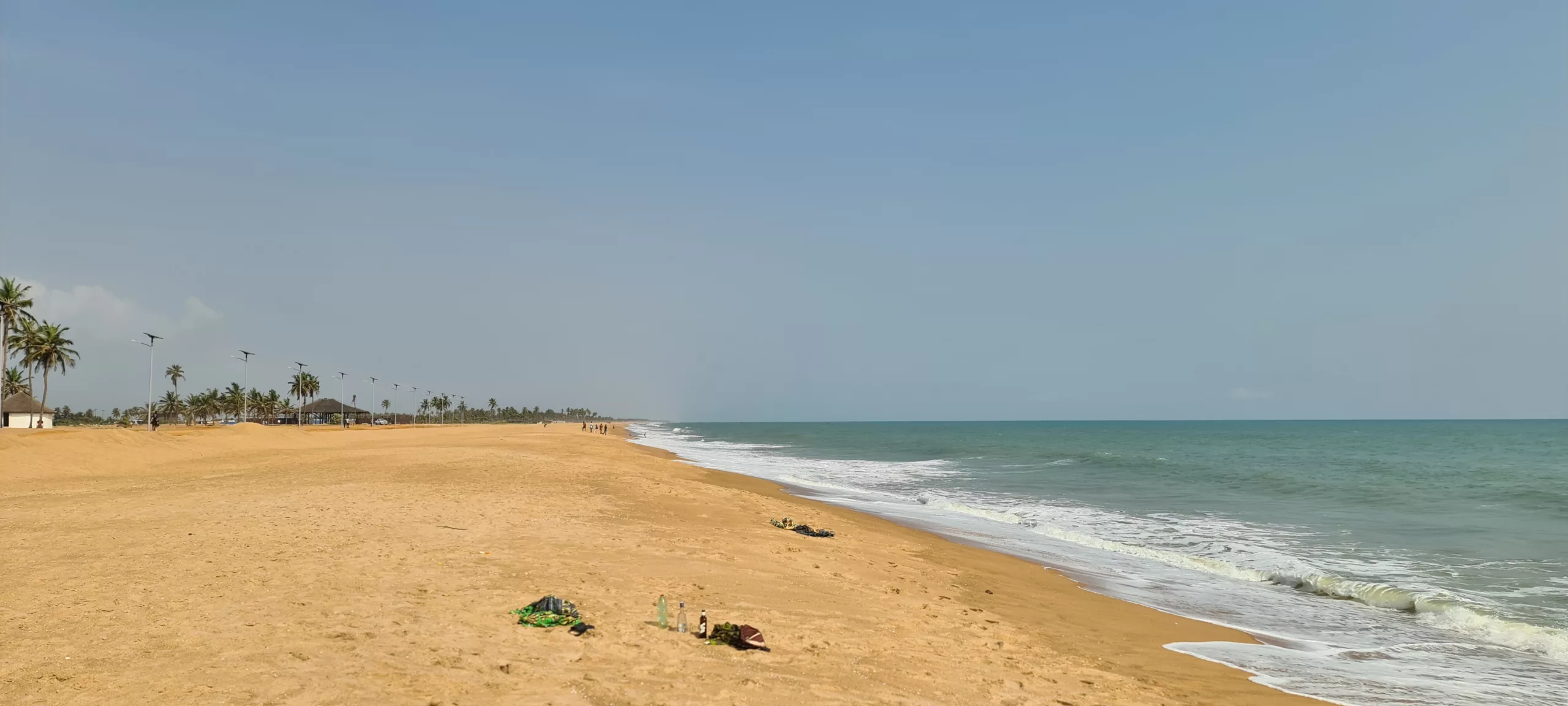
- The beaches of Grand-Popo, perfect for relaxing by the ocean under coconut trees, far from mass tourism.
- The stilt village of Ganvié, nicknamed the “Venice of Africa,” where you discover a unique way of life on the water, shaped by fishing and canoes.
- The rich historical heritage of Ouidah, which tells the darkest chapters of the slave trade while also being home to fascinating Vodun temples.
- Porto-Novo, the cultural capital, best visited with a local guide so you don’t miss any of its history and architecture.
- Lake Ahémé, with its calm waters bordered by small villages where fishing and Vodun play a central role in everyday life.
- The Black River, a mystical river that plays an essential role in the lives of local communities and offers stunning landscapes.
- Beninese cuisine, surprising for its intense flavors and unique textures, somewhere between doughs and sauces. And please—eat fish! It’s absolutely delicious.
- Spirituality and Vodun ceremonies, which help deconstruct many preconceived ideas about this fascinating religion, deeply connected to the elements of nature.
- The history of slavery, inseparable from Benin. Traveling here also means taking the time to understand this painful period through the places, monuments, and stories that bear witness to it.
- The Vodun Days, the country’s major cultural event, which attracts more and more foreign visitors each year eager to discover Vodun while celebrating and enjoying themselves.
- A much slower pace of life. Dishes take time to prepare, sitting on a chair in the street watching life go by is normal, and putting the world to rights over a beer on a terrace is essential. Here, you slow down and learn to live differently. In short: you slow down and take the time to simply exist.
- And finally, the welcome. Even though some moments were difficult for me, I was incredibly well received by the families and groups of my friends. Always a glass of sodabi, always a generously filled plate, always someone making sure I was okay. And that may well be one of the best memories of my trip: having lived real moments with local people.


I hope this article on 12 things to know before a first trip to Benin has been useful in helping you better understand the country before your arrival and in ensuring you make the most of your trip, because it is truly a destination that deserves to be discovered slowly and thoughtfully.
RECOMMENDED ARTICLES